

Numerology often connects Life Path 8 with ambition and stewardship, and Life Path 6 with care and responsibility. Together, the numbers invite a practical question about love. How can both partners pursue what matters to them while sharing the work of everyday life?
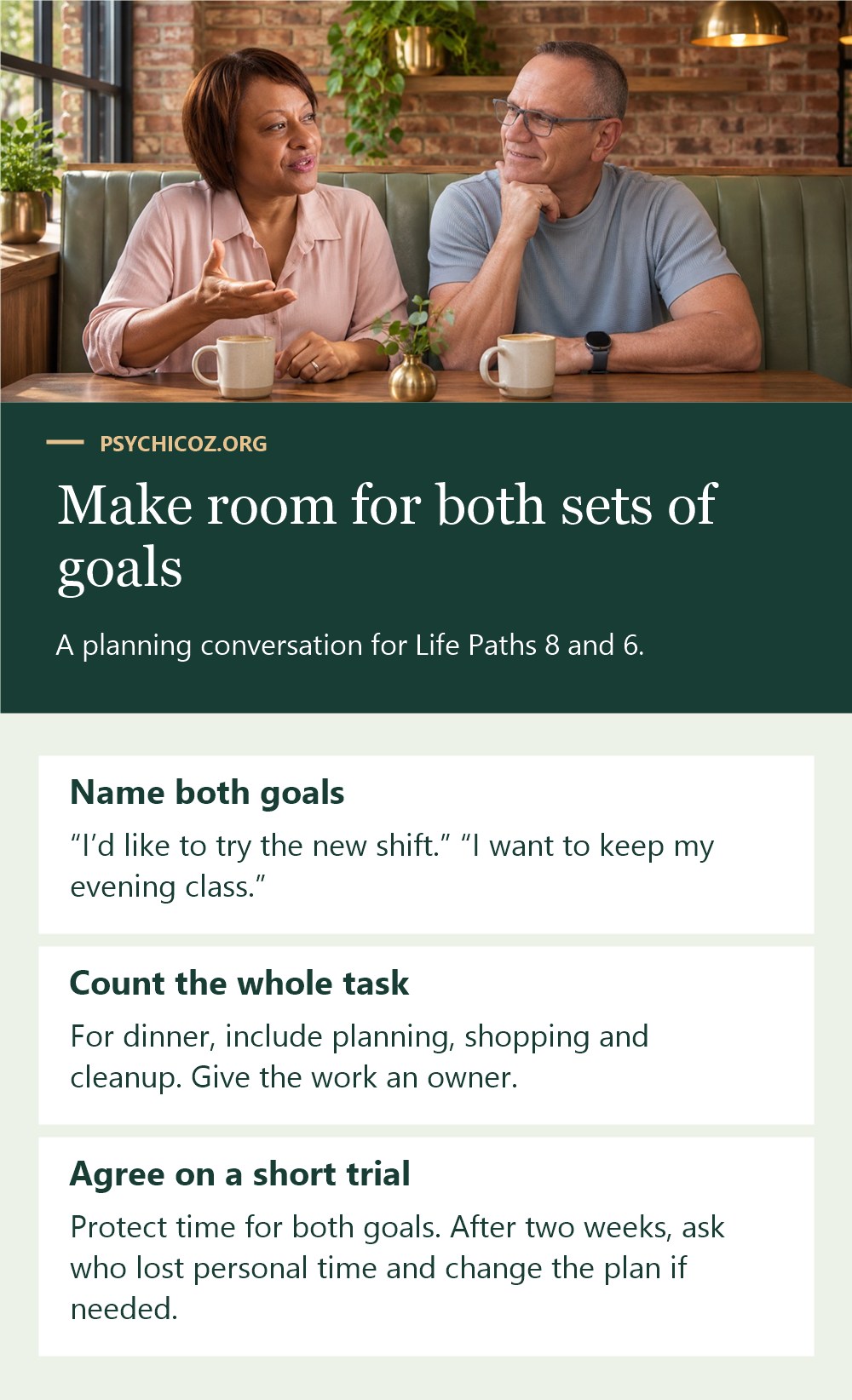
How Life Path 8 and 6 can support each other
A person who identifies with 8 might enjoy organizing a large project or taking on a challenge. A person who relates to 6 might ask how that challenge affects everyone at home. Both perspectives can improve a plan. Both people may also be ambitious, nurturing or ready to change roles as circumstances change.

Count the work a new goal creates
Imagine one partner is considering a promotion with evening hours. Start with what each person would gain, then talk through the new schedule. Who would pick up groceries, prepare meals or handle evening care? Could you try the schedule for a short period and review it together? A shared decision accounts for both partners’ time, including the time they need for their own goals.
Make room for both voices in money conversations
When a purchase or commitment affects you both, agree on when you’ll discuss it and what information each person needs. Try, “I’d like us both to see the costs and have a day to think before we decide.” Your spiritual values can help you name what you want to protect. Use the actual numbers to understand what the choice would mean for your household.
Protect time for connection and individual interests
If work or caregiving has filled the week, name one small window you can realistically keep. A walk or an unrushed meal can give you space to hear how the other person is doing. Keep a window for each partner’s own plans, too. Our guide to grounding and spiritual renewal offers a way to reflect before a busy week.
Put both goals on the calendar
Say one partner is preparing for a qualification and the other has been hoping to resume an evening class. Set out what each plan would require before choosing dates.
- Name each commitment. Write down which evenings each activity would take, including travel or preparation time.
- Cover the shared work. Pick who will handle the tasks that fall in those windows and what you can simplify.
- Review the trade-off. After two weeks, ask whether both people still have enough time for rest and their own priorities.
When both goals need the same evening
Suppose one of you needs Tuesday to study and the other has a Tuesday evening class. Ask which parts of each plan are fixed. If the class can only happen on Tuesday, protect Thursday for study and move Thursday’s usual dinner duty to the partner who took the class. If both commitments are fixed, consider which other task you can simplify or share so both have preparation time.
At the next check-in, look at what actually happened. Did one person miss their time or spend it making backup arrangements? If so, move the whole task, including the reminders, to the person who agreed to take it. Set a review date you can both keep.
A question for your next check-in
Ask, “What responsibility feels invisible right now, and what would help you share it?” Agree on who will take the next step and when you’ll check back. If you’re exploring what you want this season to stand for, see our guide to values and relationships on your soul journey.
If you’re still working out either number, try the free Life Path calculator.
Frequently asked questions
1. Are Life Paths 8 and 6 compatible?
Numerology often associates 8 with ambition and stewardship, and 6 with care and responsibility. Use those themes to ask whether each partner has a voice in decisions and enough time for their own goals.
2. How can an 8 and 6 couple handle a change in work hours?
Map the hours that will change and name who will cover each affected task. Try the arrangement for a short period and agree beforehand on when to review it.
3. How can we divide the work behind a shared goal?
Count planning, reminders, and backup arrangements along with the task itself. For example, whoever owns grocery pickup checks what’s needed, places the order, and works out a backup if a shift runs late.
4. What if our individual goals need the same time slot?
Name the exact time each person needs and look for a trade you can both keep. You might alternate Tuesdays or protect two different evenings after redistributing the tasks that fall on them.
5. How can we talk about a purchase that affects us both?
Agree on when to talk and what each of you needs to know, such as the total cost, ongoing work, and what else the purchase would change. Give both partners time to raise concerns before deciding.
6. How do we tell if a trial arrangement is working?
Ask what each person gained, which tasks took longer than expected, and whether either of you kept losing personal time. Adjust one part of the plan and set another review date.