
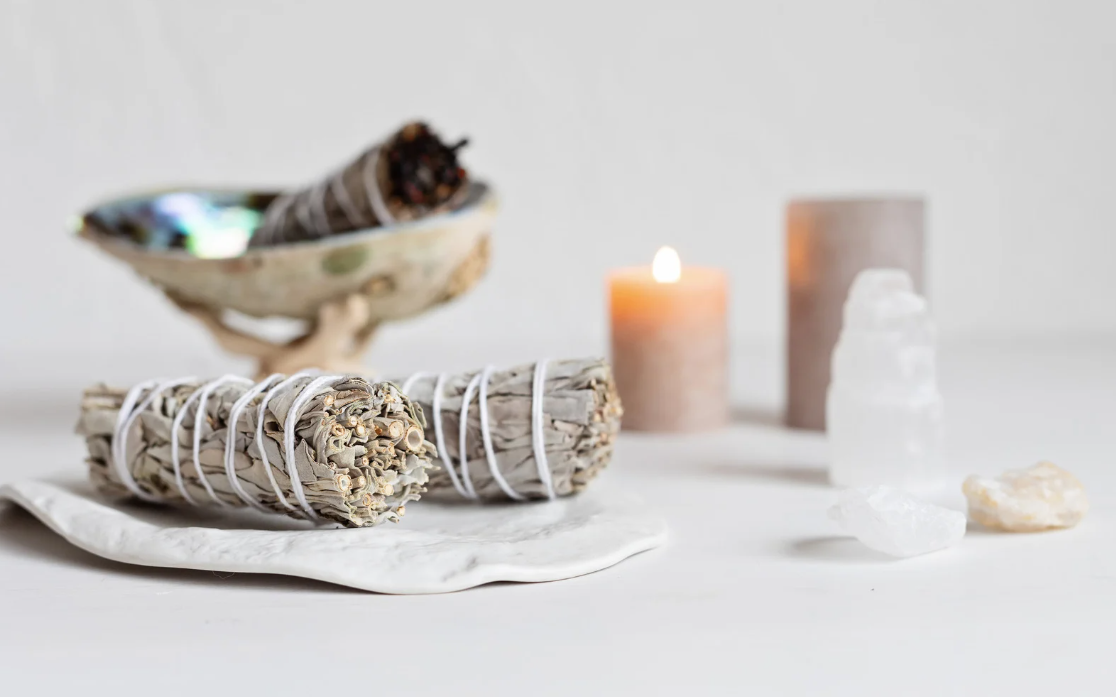
A home aura-cleansing ritual can be a gentle way to mark a transition, release the emotional tone of a difficult day, and make your space feel more intentional. Think of it as a spiritual or reflective practice—not a detox, a treatment for illness, or proof that invisible negativity has attached itself to you.
In contemporary spiritual language, an aura is often described as a subtle field around a person. People may use colors, sensations, or imagery to talk about mood and presence, but an aura is not an established structure in medical anatomy. A heavy feeling after a stressful room or conversation may come from ordinary factors such as tension, conflict, fatigue, sensory overload, stale air, clutter, or association. A ritual can help you pause and reset while you also address those practical causes.
Start With the Home You Actually Have
You do not need special tools or a perfect room. Begin with the most immediate physical needs: put away tripping hazards, open a curtain, adjust the temperature, drink water, and bring in fresh air if outdoor conditions and your health allow. If a room contains smoke, mold, a gas odor, exposed wiring, or another hazard, leave the area and get appropriate help. Spiritual cleansing cannot make an unsafe environment safe.
Choose a small area—a chair, bedside table, doorway, or work surface—and decide what “clear” means for this session. It might mean calmer, quieter, more welcoming, or ready for sleep. This gives the ritual a realistic purpose instead of asking it to remove every difficult feeling.
A Five-Minute Smoke-Free Aura-Cleansing Practice
- Arrive: stand or sit with both feet supported. Look around and name five neutral things you can see.
- Ventilate or refresh: open a window briefly if safe, run an appropriate fan, or simply straighten one small surface.
- Choose a symbol: use a glass of plain water, a stone, a flower, a battery-operated candle, or no object at all.
- Set a boundary: say, “This home is for rest, honesty, and respectful connection,” or write your own words.
- Move with attention: walk slowly through the space or sweep your hands around your body without touching it. Imagine setting down the day rather than extracting a substance.
- Take one practical action: send the message, wash the cup, change the bedding, lower the noise, or make tomorrow’s first task visible.
- Close: thank the space, put away any tools, and notice whether you feel the same, slightly calmer, or more activated.
No sensation is required. Tingling, warmth, tears, or calm can occur during focused attention, but they do not verify an energy field. Feeling no change does not mean you failed.
Smoke, Sage, and Cultural Respect
“Smudging” is not simply a generic word for burning a pleasant herb. It names ceremonial practices with particular meanings in Indigenous communities. The National Park Service’s Little Bighorn plant guide notes the cultural importance of sage cleansing among Apsáalooke, Cheyenne, Arapaho, and Lakota peoples. Traditions vary by Nation, family, and ceremony, so a social-media recipe should not be presented as an authentic Indigenous rite.
If this is not your tradition, you can describe what you are doing plainly: burning household incense, using aromatic herbs, or performing a personal home ritual. Learn who produced the plant, buy from a transparent and responsible source, avoid wild harvesting without permission, and listen when members of a community explain that a ceremony is closed or should not be copied.
Smoke is optional. It does not heal the immune or nervous system, cure sickness, remove toxins, or guarantee relief from anxiety. It can also irritate people with asthma, migraines, allergies, or other respiratory sensitivities. Apartments, rentals, workplaces, and care settings may prohibit smoke or open flames. A quiet spoken intention, music at a comfortable volume, cleaning, ventilation, or a battery candle can serve the same reflective function.
If You Choose to Burn an Herb or Incense
Treat every ember as an open-flame risk. Use a stable, heat-resistant container on an uncluttered surface. Keep it away from curtains, paper, bedding, hair, loose clothing, children, pets, and oxygen equipment. Never carry burning material while distracted, never leave it unattended, and extinguish it fully before leaving the room or going to sleep.
The National Fire Protection Association advises keeping candles at least one foot from anything that can burn and putting them out whenever you leave the room. The same conservative distance and supervision make sense for incense and burning herbs. Follow local fire rules and your building’s policies.
Use only products meant to be burned as incense. Do not burn unknown plants, chemically treated bundles, resins you cannot identify, or material gathered beside roads. Open a route for fresh air only if doing so is safe, and stop if anyone coughs, wheezes, feels dizzy, or develops chest tightness. Breathing trouble can require urgent medical care.
A Safer Spiritual Bath or Shower
A warm bath or shower can feel soothing, but it does not detox organs, drain lymph, remove spiritual blockages, or cure illness. Plain water is enough for a symbolic reset. You might imagine the day rinsing away, name one thing you are releasing, and change into comfortable clothes afterward.
Avoid homemade mixtures of lemon juice, vinegar, ground ginger, salts, and multiple essential oils. Acidic ingredients can sting irritated skin; oils do not disperse evenly in water and concentrated drops can contact the skin. Slippery tubs, very hot water, and getting up quickly can also cause falls or dizziness.
If you use a scented product, choose one specifically labeled for bath use and follow its directions. Patch-test when appropriate, keep it away from eyes and broken skin, and stop if you develop burning, rash, swelling, nausea, headache, or breathing difficulty. Poison Control warns that essential oils can cause skin reactions and serious poisoning when misused; products should be used according to their labels and kept away from children.
Pregnant people, children, people with asthma or sensitive skin, and anyone taking medication should ask a qualified clinician before using essential oils. Never swallow an essential oil or add it to drinking water.
Protect Pets and Other People in the Home
Ask before filling a shared space with fragrance or smoke. Another person’s migraine, asthma, sensory sensitivity, trauma history, or religious boundary matters more than completing a ritual exactly as planned.
Pets need special protection too. The ASPCA Animal Poison Control Center says concentrated essential oils can harm pets and should not be applied directly to them; oils should be secured against ingestion, and diffusers are best avoided around birds. Do not pass smoke around an animal, put oils on fur or paws, or assume a “natural” product is harmless. Contact a veterinarian or animal poison service if exposure is followed by vomiting, unsteadiness, unusual sleepiness, breathing changes, or other concerning signs.
Visualization and Meditation Without Health Promises
For a no-product practice, sit with your eyes open or softly focused. Imagine a color that represents the quality you want—perhaps blue for quiet or gold for warmth—moving through the room as you breathe normally. Then name the concrete behavior that will support that quality. If you want quiet, silence notifications. If you want welcome, clear a chair. If you want a boundary, decide when you will stop answering work messages.
Color imagery can organize attention, but it does not pull toxins from the body or remove physical illness. If inward focus increases panic, dissociation, intrusive memories, or agitation, stop, look around the room, feel your feet, and choose an external activity. The broader guide to aura reading can help you hold color impressions as symbolic observations rather than diagnoses.
When the “Heavy” Feeling Needs Another Kind of Help
Use context before assigning a spiritual cause. A carbon monoxide alarm, headache shared by several people, gas odor, sudden confusion, chest pain, fainting, or trouble breathing needs immediate safety or medical action. Persistent exhaustion, low mood, fear, sleep disruption, or conflict may call for a clinician, therapist, housing professional, or trusted support person.
If the feeling is mainly emotional, the ideas in What to Do When You Feel Weighed Down? offer practical grounding and decision prompts. If you feel watched, controlled, unsafe with someone in the home, or afraid to set boundaries, contact a local domestic-violence service or emergency resource when it is safe to do so.
A useful cleansing ritual should leave you with more choice, not more fear. Be cautious of anyone who declares your home cursed, insists only they can clear it, demands secrecy, or pressures you into costly repeat services.
Frequently Asked Questions
Do I need sage to cleanse my aura at home?
No. A smoke-free ritual using fresh air, tidying, a spoken boundary, visualization, water, or a battery candle can support the same reflective goal. Sage practices also have specific cultural contexts that deserve respect.
Can aura cleansing remove illness or toxins?
No. Aura cleansing is a spiritual or reflective ritual, not a medical detox or treatment. Seek qualified care for physical or mental-health symptoms, and act immediately on environmental hazards.
Is it safe to put essential oils in a bath?
Pure oils can irritate skin, do not mix evenly with water, and may be toxic if swallowed. Use only a product labeled for bath use, follow its directions, and avoid it when a clinician advises against it. Keep all oils away from children and pets.
What should I do if meditation makes me feel worse?
Stop the practice, open your eyes, orient to the room, and choose a simple external activity. If panic, dissociation, intrusive memories, or other distress persists, contact a qualified mental-health professional or urgent support service.