
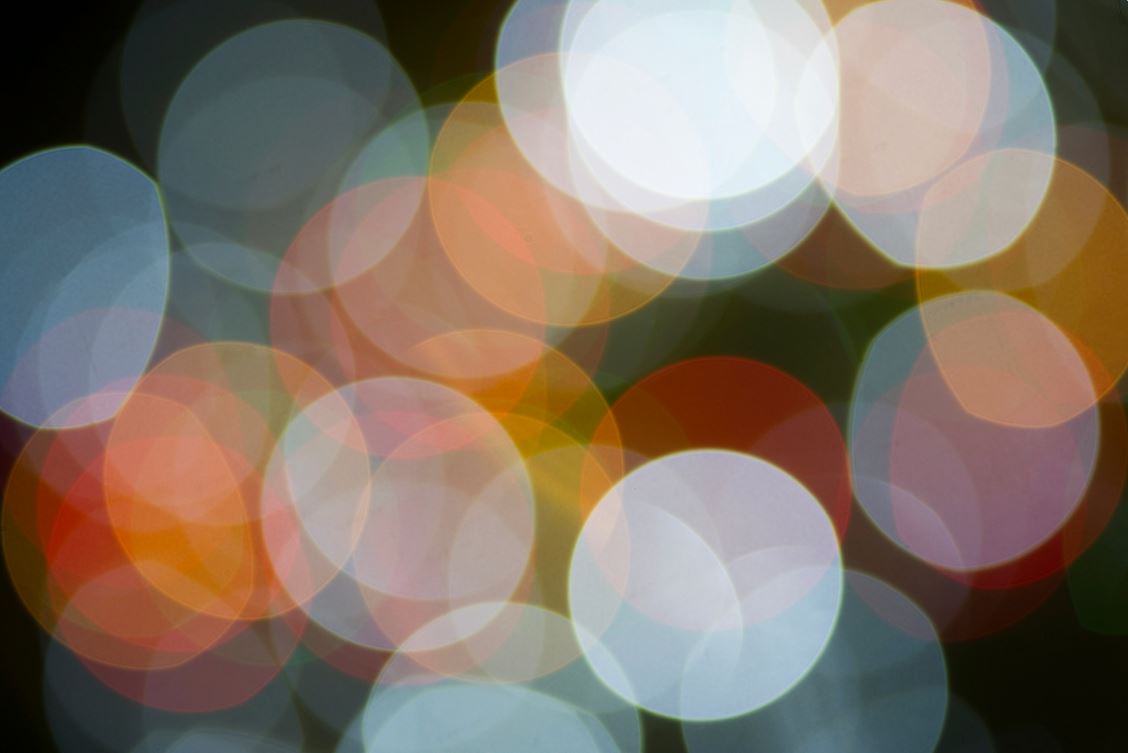
A bright circle in a photo can feel mysterious—especially when it appears near a loved one, at a meaningful place, or during an emotional moment. In paranormal communities these circles are often called orbs. Some people interpret them as spirits, angels, guides, or concentrated energy. Photography, however, offers several common explanations that should be checked before assigning a spiritual meaning.
Orb color and size do not provide a reliable identity card for a spirit. A large white circle is not evidence of a powerful soul, and a dark spot is not a warning of evil or depression. Color, brightness, and apparent size are strongly affected by the camera, light, distance, moisture, dust, focus, compression, and editing.
What Usually Causes Orbs in Photos?
Flash reflecting from nearby particles
The most common bright “orb” is an out-of-focus particle close to the lens. Dust, pollen, rain, snow, mist, or a tiny insect can reflect the camera’s flash. Because the particle is much closer than the subject the camera focused on, it appears as a soft circle instead of a recognizable object.
Nikon’s support guidance explains that a built-in flash can create one or more circular spots when light reflects back from airborne dust or rain near the camera. This effect is especially easy to produce in dark, dusty, damp, snowy, or rainy settings.
Lens flare and internal reflections
A bright lamp, candle, window, moon, sun, or flashlight near or just outside the frame can reflect between lens elements. Adobe’s lens-flare guide notes that flare can appear as circles, rings, starbursts, or haze. Multiple circles may line up with a bright source, sometimes on the opposite side of the image.
Bokeh and out-of-focus lights
Small lights in the background can become smooth circles when they are outside the depth of field. Their shape may reflect the lens aperture. Holiday lights, streetlights, reflections on water, and distant headlights often produce colorful circles without anything unusual being present.
Insects, webs, and security-camera infrared
Night-vision cameras illuminate scenes with infrared light. A moth, spider, strand of web, raindrop, or dust particle close to the lens can appear bright, transparent, or strangely shaped. Motion blur can create a tail or rapid floating movement. Video compression and automatic exposure can make the shape pulse or change color.
Dirt, moisture, and processing artifacts
A smudge or droplet on the lens, a dirty protective cover, sensor dust, high ISO noise, aggressive sharpening, HDR blending, and image compression can all create spots or halos. First inspect the original file rather than a screenshot or social-media copy.
Why Orb Size Does Not Measure Spiritual Energy
Apparent size in an image is not the same as physical size. A tiny particle extremely close to the lens can create a large blurred circle. A more distant particle can appear smaller or disappear. Changing focus, aperture, flash position, crop, or camera resolution can also change the circle.
This means a large orb does not establish stronger emotion, divine energy, a ghost, or a “lost soul.” A small orb does not establish a nature spirit or low energy. The photograph alone cannot supply distance, identity, intention, or emotional state.
Why Orb Color Is Unreliable
Digital color depends on white balance, exposure, sensor response, surrounding light, lens coatings, reflections, filters, screen settings, and editing. A white particle can look blue under cool lighting, orange under warm lighting, green near foliage, or purple because of chromatic flare.
Dark or gray circles may be shadows, insects against a bright sky, sensor contamination, or processing artifacts. They do not diagnose depression, predict danger, or prove “negative vibration.” Likewise, red, gold, white, or blue does not verify an angel or healing message.
A Symbolic Orb-Color Guide—Not a Spirit Dictionary
If color symbolism is part of your spiritual practice, use it as a prompt for reflection rather than a factual decoding system. Meanings vary by culture and individual association. You might ask:
- White or silver: What would clarity or a fresh start mean here?
- Gold or yellow: What feels valuable, hopeful, or deserving of attention?
- Red: Where do I need courage, grounding, or a practical safety check?
- Orange: What could I approach with creativity or warmth?
- Pink: Where would compassion help without erasing boundaries?
- Green: What part of life needs patience, growth, or time outdoors?
- Blue: What needs calm communication or careful listening?
- Purple: What spiritual question can I hold without rushing to certainty?
- Brown: What ordinary, material detail needs attention?
- Black or gray: What am I afraid the image means, and what evidence supports that fear?
These prompts describe your response to a color. They do not identify an external being.
How to Investigate an Orb Photo
- Keep the original: preserve the full-resolution file and its metadata. Avoid repeatedly resaving it.
- Check the flash: determine whether a flash or infrared light fired.
- Identify bright sources: look for lamps, windows, candles, reflective surfaces, or lights just outside the frame.
- Review conditions: note rain, fog, snow, wind, dust, smoke, pollen, insects, or recent cleaning.
- Inspect the lens and cover: check for fingerprints, droplets, condensation, webs, or debris.
- Compare nearby frames: look at photos or video seconds before and after. A particle may appear in only one frame.
- Repeat the shot: photograph the same scene with the flash off, more room light, a clean lens, and a different camera position.
- Ask a photographer: share the original file and circumstances, not only a cropped orb.
A result that remains unexplained is still unexplained—not automatically paranormal. Lack of an immediate ordinary explanation does not identify a spirit.
Can a Photo Still Feel Spiritually Meaningful?
Yes. A technically ordinary image can become a meaningful reminder of someone, a prayer, a place, or a turning point. Personal meaning does not require a claim that the camera proved the presence of a spirit.
You can say, “This photo makes me feel connected to my grandmother,” without saying, “This circle is definitely my grandmother.” That distinction protects memory and meaning while leaving room for uncertainty.
If angel symbolism is important to you, Signs You Are Being Visited by an Angel offers a broader discernment framework. If the image inspires prayer, How to Angel Pray provides a grounded practice that pairs spiritual reflection with practical judgment.
Safety and Privacy Before Sharing
Before posting an orb photo, check what else it reveals. Images may expose children, home addresses, school uniforms, workplace badges, medical details, license plates, documents, or location metadata. Get permission from identifiable people, especially in private or grieving situations.
Do not tell a frightened person that a dark orb proves danger, a curse, a dead person, or an unwanted presence. Fear-based certainty can increase distress and make people vulnerable to scammers who charge for cleansing or protection.
If unusual images are accompanied by persistent voices, severe sleeplessness, paranoia, confusion, or difficulty functioning, do not treat the photo as confirmation. Encourage assessment by a qualified health professional. Seek urgent help if anyone may harm themselves or another person.
A Balanced Conclusion
Most photographic orbs have straightforward optical or environmental explanations. Their color and size are shaped by camera conditions, not a validated code of spirit identity or energy. You may still use an orb as a personal symbol—just label the interpretation as belief, investigate the image carefully, and avoid high-stakes decisions based on it.
Frequently Asked Questions
What causes white orbs in flash photos?
They are commonly caused by flash reflecting from dust, pollen, moisture, or another small particle close to the lens. Because the particle is out of focus, it appears as a soft circle.
Does a large orb have more spiritual energy?
No. Apparent size depends on distance from the lens, focus, aperture, crop, and other camera factors. A tiny nearby particle can produce a very large circle.
Do different orb colors identify different spirits?
There is no reliable evidence-based color code. Lighting, white balance, reflections, sensor response, and editing can change color. Spiritual color meanings are best used as personal reflection prompts.
How can I test whether an orb is a camera artifact?
Keep the original file, check flash and weather conditions, clean the lens, identify bright sources, compare nearby frames, and repeat the photo with the flash off and the camera repositioned.