
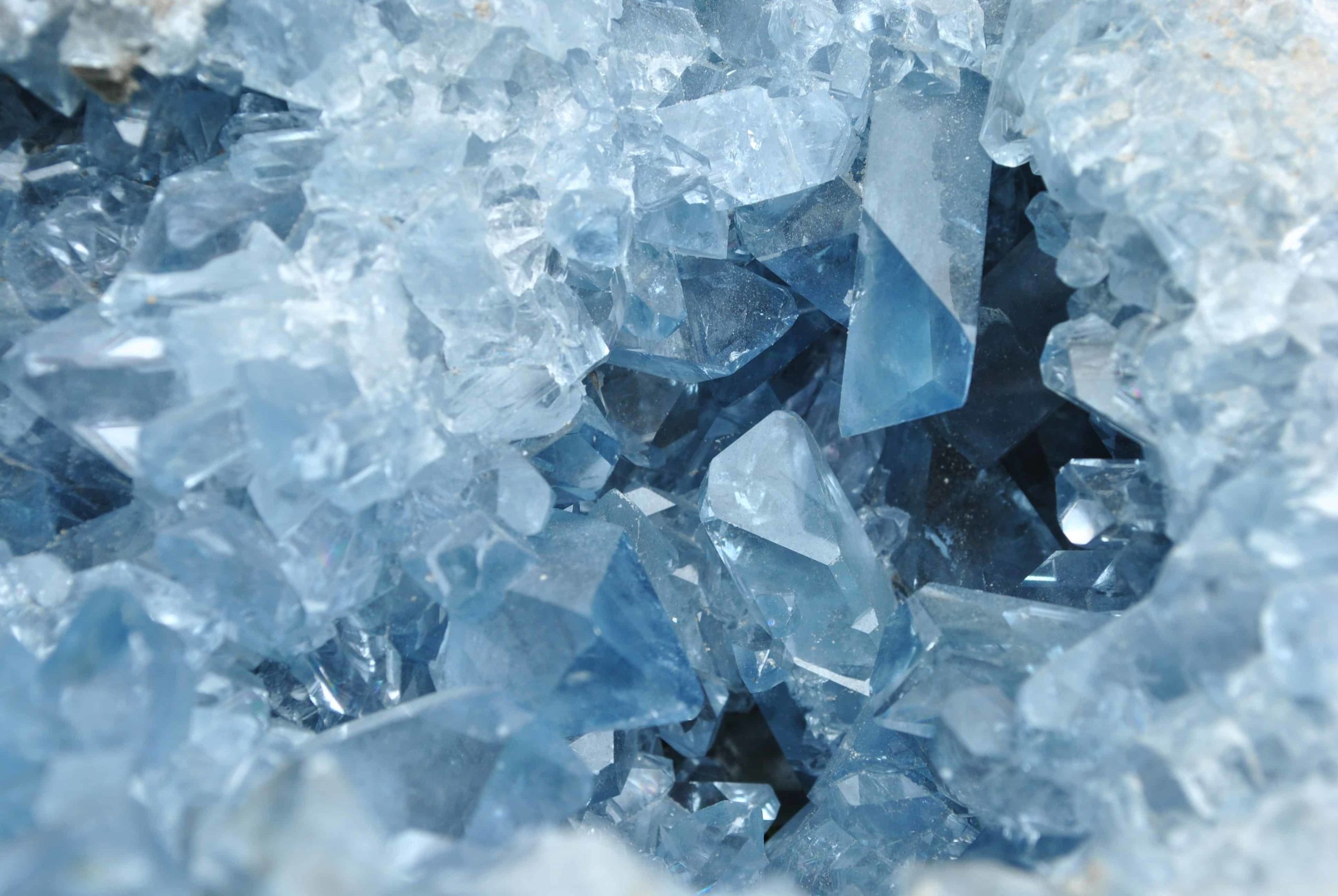
Calming stones can be beautiful, tactile reminders to pause. In crystal traditions, different minerals are associated with peace, protection, sleep, clarity, or spiritual connection. Those meanings are cultural and personal; crystals have not been established as treatments for anxiety, insomnia, trauma, depression, or other health conditions.
A stone may still support a calming routine by giving your hands and attention something specific to notice. The useful practice is the pause, sensory focus, chosen intention, and next action—not a guarantee that the mineral raises vibration, removes negativity, or heals a chakra.
Seven calming stones and grounded ways to use them
1. Amethyst: a cue for evening quiet
Amethyst is purple quartz traditionally linked with calm, intuition, and the crown or third-eye chakra. Place a smooth piece where you begin a wind-down routine. When you see it, dim lights, silence nonessential notifications, and write down tomorrow’s tasks.
The stone itself is not a sleep treatment and does not bring guaranteed abundance. If sleep problems persist, assess schedule, substances, pain, medication, breathing, mood, and other possible causes with a health professional.
2. Celestite: a cue for a gentler pace
Blue celestite is often associated with serenity and angelic symbolism. Use its color as a reminder to lower your voice, unclench your jaw, and take one task at a time. It does not establish angel contact or clear fear from the mind.
Celestite can be soft and fragile. Handle it gently, keep it dry unless a reliable mineral-care source says otherwise, and avoid creating or inhaling dust.
3. Fluorite: a cue to sort information
Fluorite occurs in several colors and is commonly used as a symbol for organization or clarity. When your thoughts feel crowded, hold or look at the stone and divide a page into: facts, worries, decisions, and next actions.
Do not assume the crystal has removed negativity or revealed the correct answer. Verify medical, financial, legal, relationship, and safety decisions through appropriate evidence.
4. Black tourmaline: a cue for boundaries
Black tourmaline is often described as protective. Let it remind you to use a practical boundary: end an insulting call, take a scheduled break, decline a request, or leave an unsafe space. It cannot form a shield that guarantees safety or prevents another person’s behavior.
5. Angelite: a cue for compassionate language
Angelite is associated in modern crystal practice with peace and spiritual communication. Use it before a difficult conversation to prepare one honest, respectful sentence. Compassion includes limits; you do not have to suppress anger or agree with someone to remain grounded.
6. Blue lace agate: a cue for paced speech
This banded blue stone is often linked with calm communication. Place it beside notes for a meeting or phone call. Pause between points, ask one question at a time, and check what you heard before responding.
7. Lepidolite: a cue for a sleep-supporting routine
Lepidolite is a lilac or pink mineral in the mica group and is popularly marketed for relaxation. It may contain lithium as part of its mineral structure, but holding it does not provide a medical lithium dose and it must never replace prescribed medication.
Use the stone only as a reminder for consistent bedtime, reduced late caffeine, lower light, and a quiet activity. Do not scrape, grind, ingest, or make a crystal elixir from it.
A five-minute calming-stone practice
- Choose one stone. Select it for texture, color, symbolism, or simple preference.
- Orient. Name the date, place, and what is happening now.
- Describe it. Notice weight, temperature, edges, pattern, color, and how it reflects light.
- Name the feeling. Try “worried,” “overloaded,” “angry,” “sad,” or “uncertain” instead of calling it bad energy.
- Choose one action. Drink water if appropriate, step away, make a list, contact support, or return to one manageable task.
If breath focus feels comfortable, let the exhale be easy and unforced. If it increases anxiety or dizziness, keep attention on the external object and room. For more present-moment options, read How to Stay Grounded.
How to “program” a stone without magical promises
Programming can be understood as assigning a reminder. Hold the stone and use a specific intention:
“When I touch this stone, I will check my shoulders, name the facts, and choose one next step.”
This does not place intelligence, healing power, or a command inside the mineral. It links an ordinary cue to a chosen behavior. Review after a week: Did the reminder help? If not, change the location, wording, or strategy.
Crystals, chakras, and spiritual meaning
You may connect a stone’s color with a chakra as part of a personal spiritual practice. Treat the association as symbolic rather than anatomical or diagnostic. A crystal cannot confirm that a chakra is blocked or explain pain, sleep trouble, panic, or another health concern.
For culturally careful chakra symbolism and practical prompts, see How to Balance Your Chakra Energy. Do not sell or buy repeated “clearing” sessions based on fear that a stone detected a curse, attachment, or dangerous energy.
Safe handling and storage
- Do not ingest stones, powders, chips, or water in which minerals have soaked.
- Avoid grinding, drilling, heating, burning, licking, or inhaling mineral dust.
- Keep small stones away from babies, children, pets, and anyone at risk of swallowing them.
- Wash hands after handling rough, unknown, dyed, coated, or crumbling specimens.
- Do not place stones in food, drinking water, bathwater, wounds, mouths, or body cavities.
- Use reliable mineral-specific instructions before cleaning with water, salt, sunlight, heat, or chemicals; some specimens fade, fracture, dissolve, rust, or release unsafe material.
- Store heavy or sharp pieces where they cannot fall, cut skin, or damage furniture.
“Natural” does not mean edible or medically safe. If a person or pet swallows a mineral or is exposed to dust, contact the appropriate local poison-control or veterinary service rather than relying on online crystal advice.
Buying crystals without pressure
Choose a budget before shopping. Ask for the mineral name, whether it is natural, synthetic, dyed, coated, stabilized, or glued, and what care it needs. Marketing names may not identify the material accurately.
Avoid sellers who diagnose illness, promise a cure, guarantee sleep, claim a stone must be replaced because it absorbed evil, or pressure you to buy an expensive collection. A common stone can serve as a sensory cue just as well as a rare one. You can also use a shell, key, smooth piece of wood, fabric, or another safe object you already own.
What evidence supports for anxiety
The National Center for Complementary and Integrative Health reviews approaches studied for anxiety, including mindfulness, relaxation, yoga, hypnosis, music, and supplements. Its anxiety evidence summary notes that results and safety vary and that more research is needed for many methods. It does not establish crystals as anxiety treatment.
A stone ritual may be an optional addition to care, not a replacement. Continue prescribed treatment unless the treating professional advises a change, and tell clinicians about complementary practices when relevant.
When calm does not come
Not calming down on command is not a failure of intention. Anxiety disorders involve more than occasional worry and can interfere with work, school, relationships, sleep, and daily activities. The National Institute of Mental Health recommends professional help when symptoms persist or interfere with life; its anxiety-disorders overview explains treatment and support pathways.
Seek urgent medical help for new or severe chest pain, breathing difficulty, fainting, confusion, neurological symptoms, or other potentially dangerous physical signs. Use local crisis or emergency services for immediate risk of suicide or violence. A crystal cannot distinguish panic from a medical emergency.
Frequently Asked Questions
Which crystal is best for anxiety?
No crystal is established as an anxiety treatment. Choose a safe object you like as a reminder for grounding, while using qualified care for persistent or impairing anxiety.
Can amethyst help me sleep?
Amethyst can cue a bedtime routine, but it does not treat insomnia. Persistent sleep problems deserve assessment for behavioral, medical, medication, breathing, and mental-health factors.
Can I put calming crystals in drinking water?
No. Do not make or drink crystal elixirs; mineral identity, coatings, contamination, solubility, and toxicity may be uncertain.
How do I program a calming stone?
Assign it a practical reminder, such as pausing to name the feeling and choose one safe action. This links a cue to behavior without claiming the stone stores a command.